Stalbridge Weston Manor
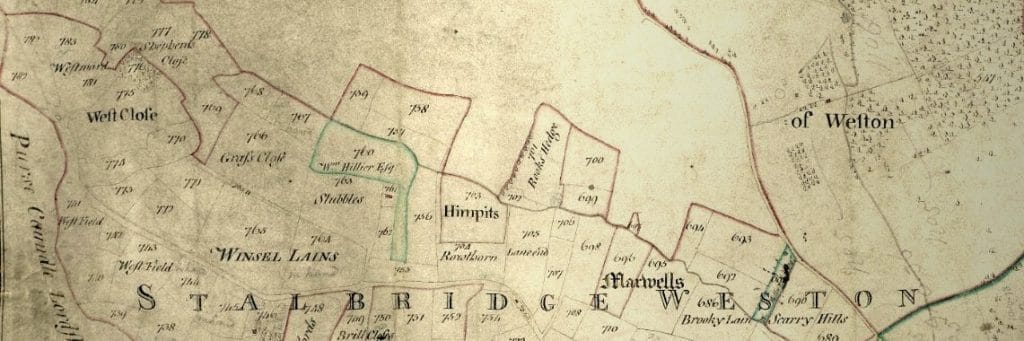
Documents and history
933 AD to the early eighteenth century
What was a manor?
What was a manor? A manor was the basic unit of land ownership and local administration in England from medieval times to the nineteenth century – in essence, an estate with a lord, tenants and a court. The court handled property transfers, boundary disputes, inheritance and the sort of local quarrels that small rural communities reliably generate. It was required to keep records. Those records are the reason we – and you – are here.
About this site
About this site: This site is the result of a number of years’ work transcribing, translating and interpreting historical documents from Stalbridge Weston, a small manor in the parish of Stalbridge in Dorset. It covers the manor’s recorded history from an Anglo-Saxon boundary charter of 933 AD to the early eighteenth century. The site includes summaries of court rolls and probate records; the manor’s surviving lawsuits, retold from the depositions; indexes of local people and places; and a narrative history. We are not professional historians; we have local knowledge, some Latin and a little Anglo-Saxon, and we have spent a good deal of time in archives. Corrections and additions are welcome via the Contact page.
For general readers
For general readers: The Manor History tells the story from Saxon origins to the 1720s: readable (we hope) but with supporting sources cited. The Court Roll and Will/Inventory summaries give a glimpse of ordinary rural life in the seventeenth/early eighteenth century, The Manor at Law retells the manor’s lawsuits and the Glossary explains unfamiliar terms you’ll encounter in the documents.
For genealogists
For genealogists: Family Threads plots the families as rows across two centuries, with a dot for every document in which a surname appears and a link to that document. There’s also a Surname Index. Wills, Inventories and Administrations offers the richest biographical detail; the Court Rolls record property transfers, disputes and family connections.
For researchers
For researchers: You will want to consult the original documents. The Acknowledgements page lists the archives we consulted and where the originals can be found. We ask that any use of our work remains non-commercial.